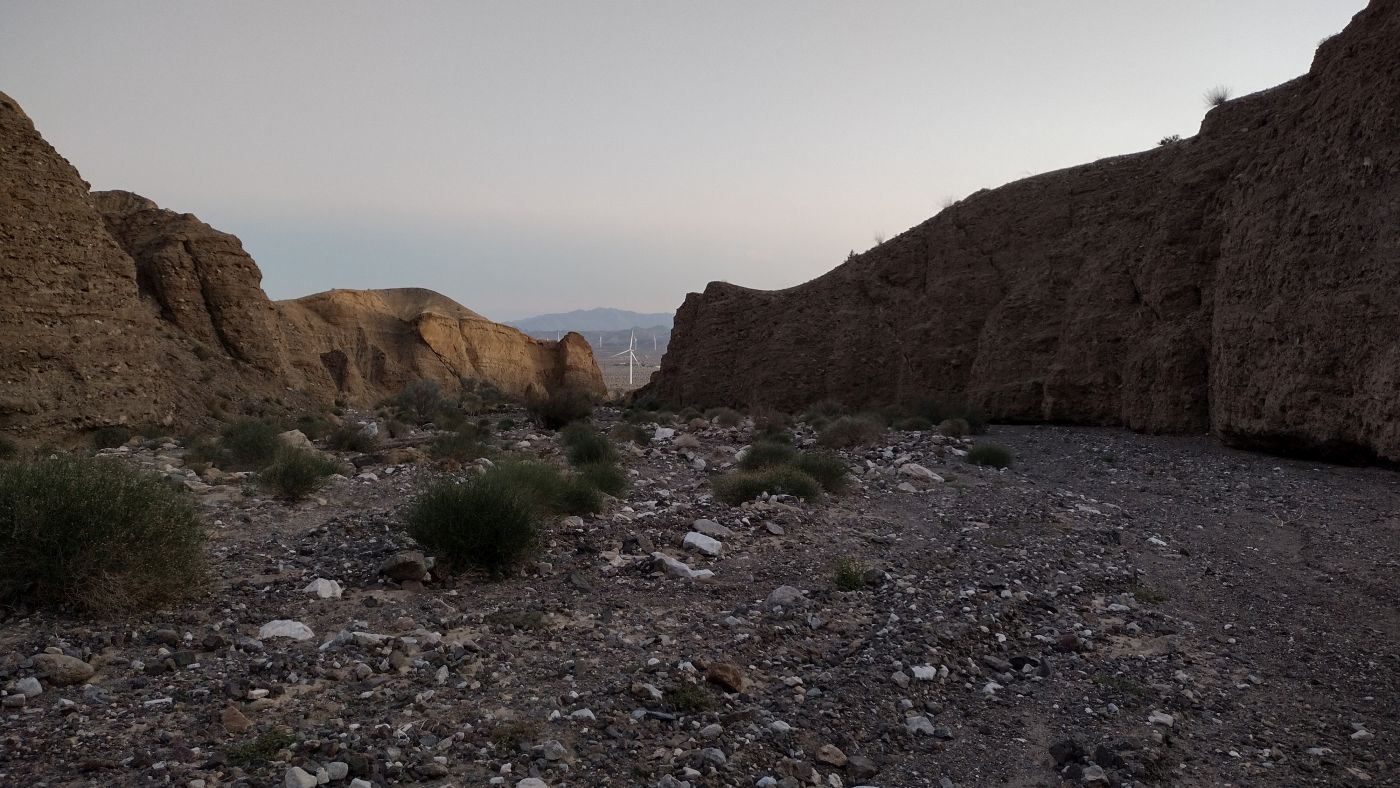
Highlights:
- Don Rideout and I have been threatening to go to Fossil
Canyon ever since Fred and Carla reported Eucnide from there on 1
December 2022. Since it is such a long way away from us, I
wanted to wait until we had more sunlight at the end of the day.
We finally decided that Friday 3 March 2023 would be the day.
Don
was a bit nervous that the Eucnide plants might have finished
blooming by now, but it turned out perfectly. EVERY plant we
saw was in bloom, many in full bloom!
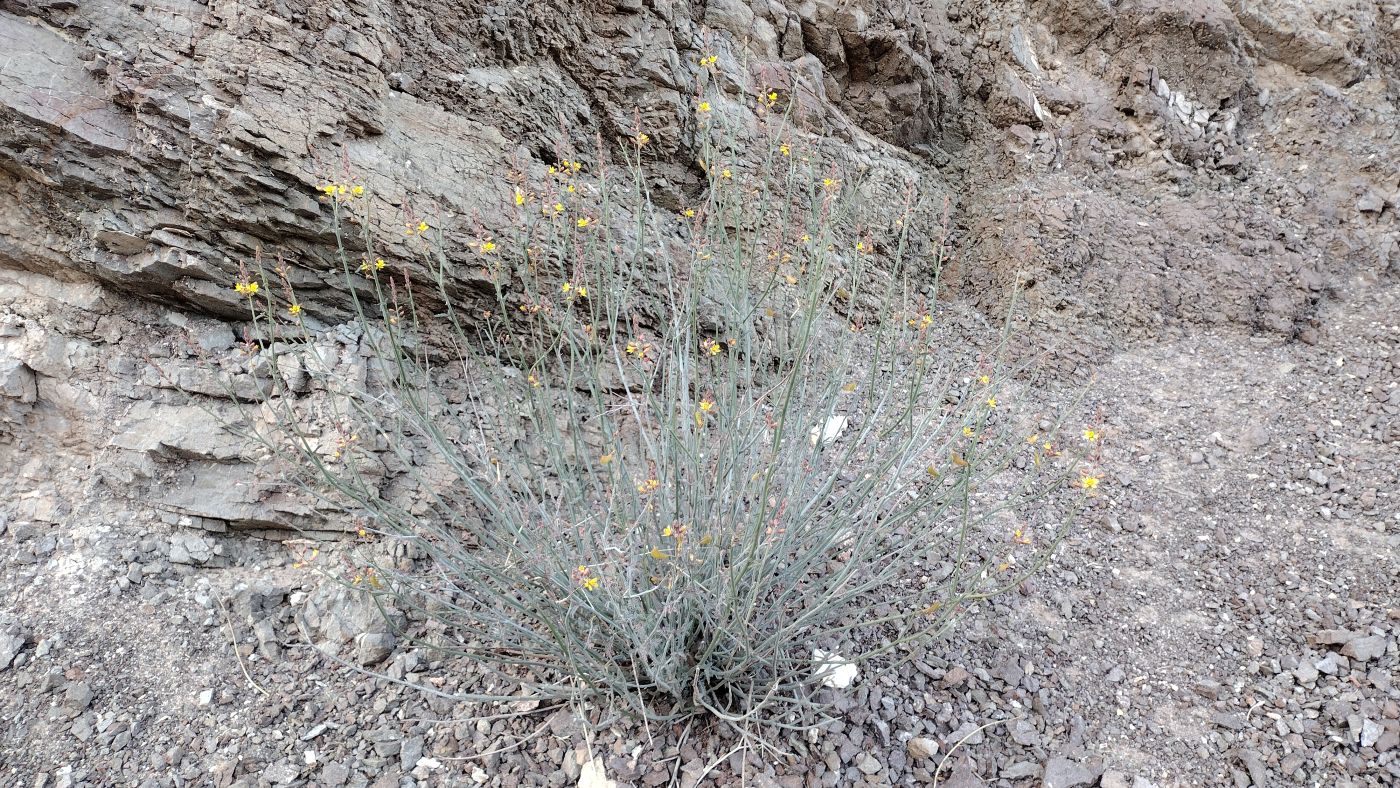
The Eucnide was the
highlight of the trip for Don, since he had never seen this species
before, and had been looking forward to seeing it for months.
Don's posts:
https://www.inaturalist.org/observations/150189405
https://www.inaturalist.org/observations/150190810
https://www.inaturalist.org/observations/150259574
https://www.inaturalist.org/observations/150276205
We counted 35 plants in the main canyon, down two
plants from Fred and Carla's count of 37 plants. As Fred and
Carla commented in December, these plants, with only one exception,
were growing in the canyon bottom, and not on the steep escarpments
where we've seen it growing before.
We might just have
missed two of their plants, or some of the plants might have been
blown away by the fierce winds of 21 February. Wind damage was
evident almost throughout our trip. Here are some examples:
A
Eucnide that lost some of its stems:
https://www.inaturalist.org/observations/150378394
A Perityle that was whipped by the wind, with some stems
damaged, but that mostly survived:
https://www.inaturalist.org/observations/150375901
An almost-unrecognizable Perityle that had been shredded
by the wind and sand:
https://www.inaturalist.org/observations/150374813
An uprooted Perityle:
https://www.inaturalist.org/observations/150375903
A wind-tossed Fagonia with at least half of its stems
swept to the other side of this plant:
https://www.inaturalist.org/observations/150375904
An uprooted Hoffmannseggia microphylla (wand holdback):
https://www.inaturalist.org/observations/150375906
However, unless you were looking for wind damage,
you might not have even noticed it, since there were tons of
still-happy plants in good bloom, which have a way of capturing one's
eyes. (:-)
- We had a second highlight when
we came across a Sphaeralcea ambigua var. rosacea in full bloom.
Don's post:
https://www.inaturalist.org/observations/150274750
I don't see this taxon very often, and Don had
never seen it. So Don was very pleased, with two new species
for him from this trip!
- There were a number of
good-looking Malperia tenuis in full bloom, and one of them turned
out to be Don's 20,000 iNat obs!
https://www.inaturalist.org/observations/150276977
Congrats, Don!
I don't think in my entire
lifetime I will ever post 20,000 observations. I stand in awe
of people like Don who are such prolific posters. What a great
contribution to science!
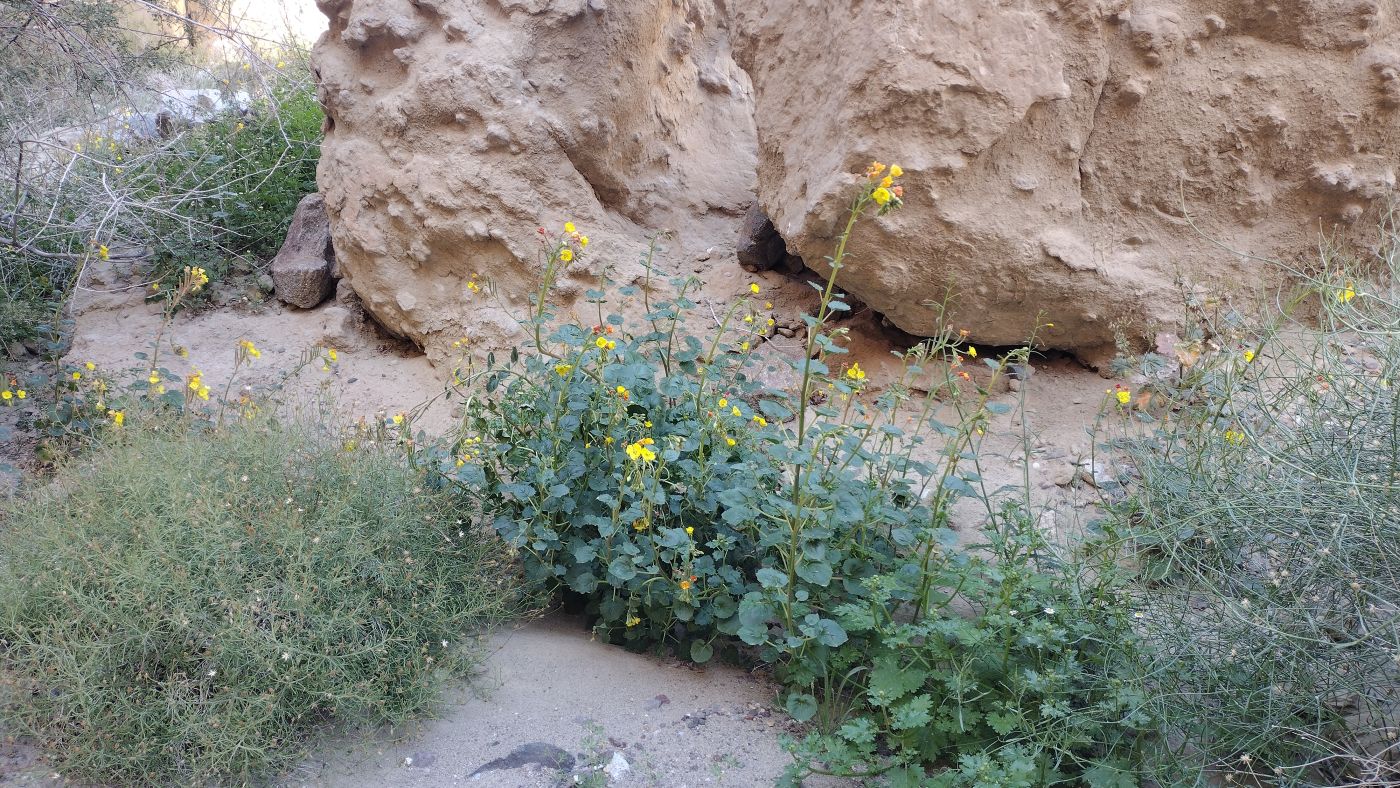
- This canyon was
absolutely filled with heart-leaf suncup, Chylismia cardiophylla, in
full bloom. Normally we only see this species in much smaller
numbers, often in small rocky alluvial slopes, or on steep slopes.
But here, just like the Eucnide, the plants were growing in the main
wash, as well as on rocky slopes. One wonders what makes it so
abundant here.
Don's pix and post:
http://tchester.org/temp/230303/rideout/chylismia_cardiophylla_1_35.jpg
https://www.inaturalist.org/observations/150189725
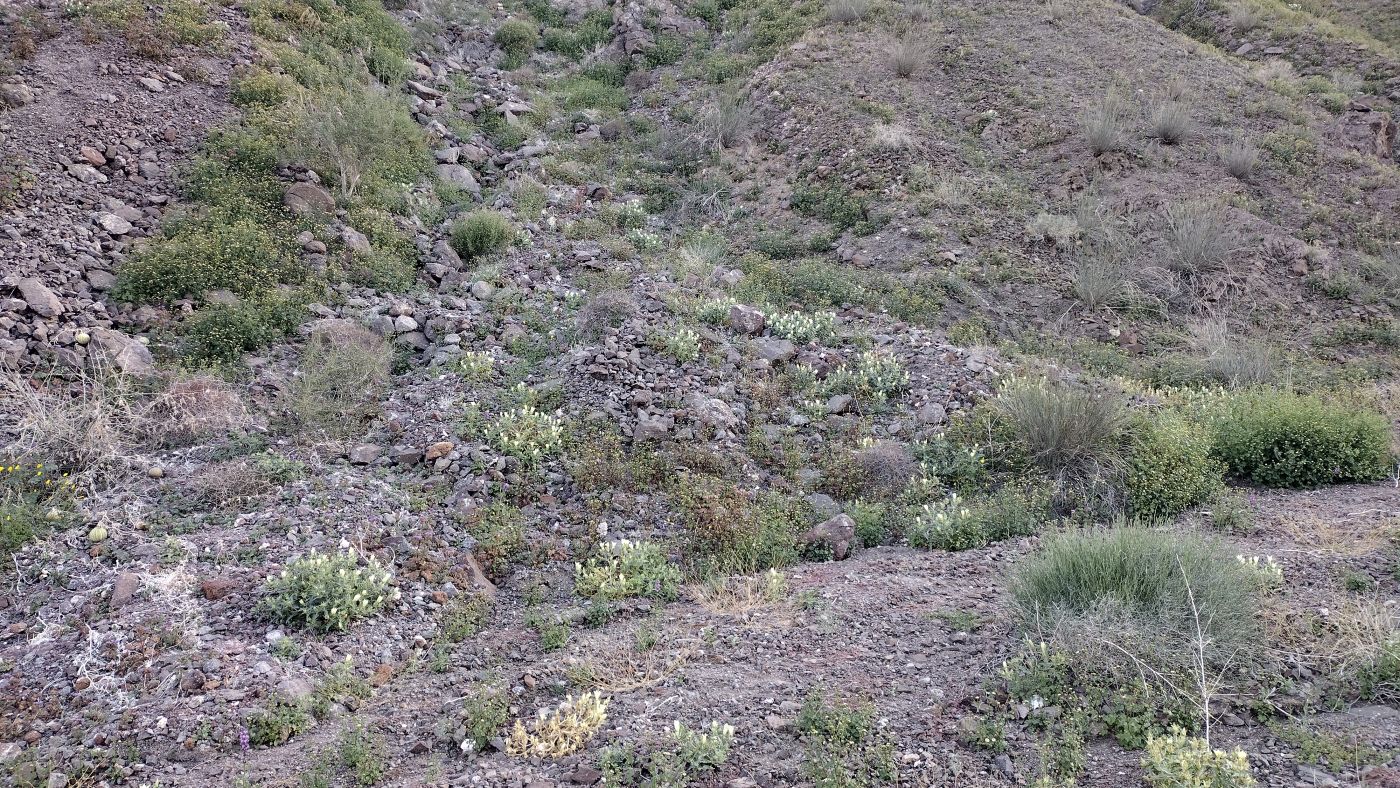
- There were breath-taking slopes that were a
garden delight of Mentzelia involucrata, accompanied by Lupinus
arizonicus, Phacelia pedicillata in places, and, of course, tons of
Perityle. Don's pix:
http://tchester.org/temp/230303/rideout/mentzelia_involucrata_garden_35.jpg
http://tchester.org/temp/230303/rideout/lupinus_arizonicus_phacelia_pedicellata_garden_35.jpg
- Overall, Don and I observed 45 species in bloom.
The list is given at the end of this email. The canyon was
probably at peak bloom, with some Perityle finished blooming.
Don
and I posted 37 obs of 30 species (your numbers may differ due to
obscured species, and I might have added more obs by the time you
read this):
https://www.inaturalist.org/observations?on=2023-03-03&place_id=95385&user_id=lagoondon,tchester
Don posted 31 obs of 27 species, and I posted 6 obs of 4
species.
Obscured species that may or may not be at
the above link for you:
Eucnide posts are given above.
Lycium parishii:
https://www.inaturalist.org/observations/150261673
Malperia tenuis:
https://www.inaturalist.org/observations/150276977
https://www.inaturalist.org/observations/150260551
Details:
The hillsides along I-15 from
SR76 to Escondido were ablaze with lovely blue Ceanothus in full
bloom.
The traffic was horrible on our drive, due
to construction. I had a 15 minute or so delay from SR76 to
Escondido, due to a single lane closure that will be closed (probably
off and on) through October. Along I-8, there were TWO places
where they had narrowed the freeway down to a single lane going east,
closing two lanes, where we crept along at 20 mph or less for a mile
or more each place. Those closures will remain in place for
some time, since those lanes were hard-closed by K-rails.
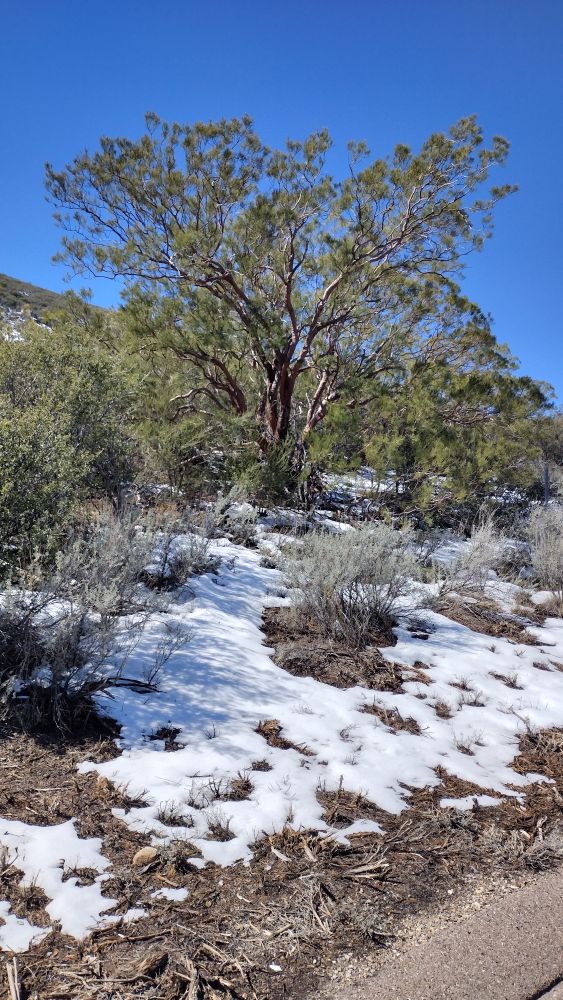
Along
I-8, we saw nothing but green plants and snow on the hillsides until
near the bottom of Mtn Spring Grade, where we started to see blooming
plants of Encelia farinosa.
Snow and red shanks just west
of the Golden Acorn casino; Don's pix:
http://tchester.org/temp/230303/rideout/snow_red_shank_along_I8_25.jpg
Myers Creek had flowing water in it!
The
sandy Ocotillo area had some Abronia mats in good bloom, but the
bloom looked muted, either due to the noontime sun, or because they
were on the downhill side of full bloom.
The dirt
road to Fossil Canyon was in good shape, except it was indistinct at
the last turn in the road, and one section looks even more precarious
than it did 12 years ago, where the wash is eating into the road.
At one point just before that, there is a fork in the road, with the
right fork having a small berm on it to try to block it off. We
soon saw (after we took the left fork) that the old section ended in
a ~6 foot drop off a cliff! (:-)
The weather
was good; a sunny 65 deg at the start, 61 deg at the end, with just
enough wind for me to keep one sweatshirt on the whole time.
One
almost-unbelievable thing we realized on the way back was that there
were NO NON-NATIVE SPECIES here at all!! No mustard; no
Erodium; no Sisymbrium. Amazing!
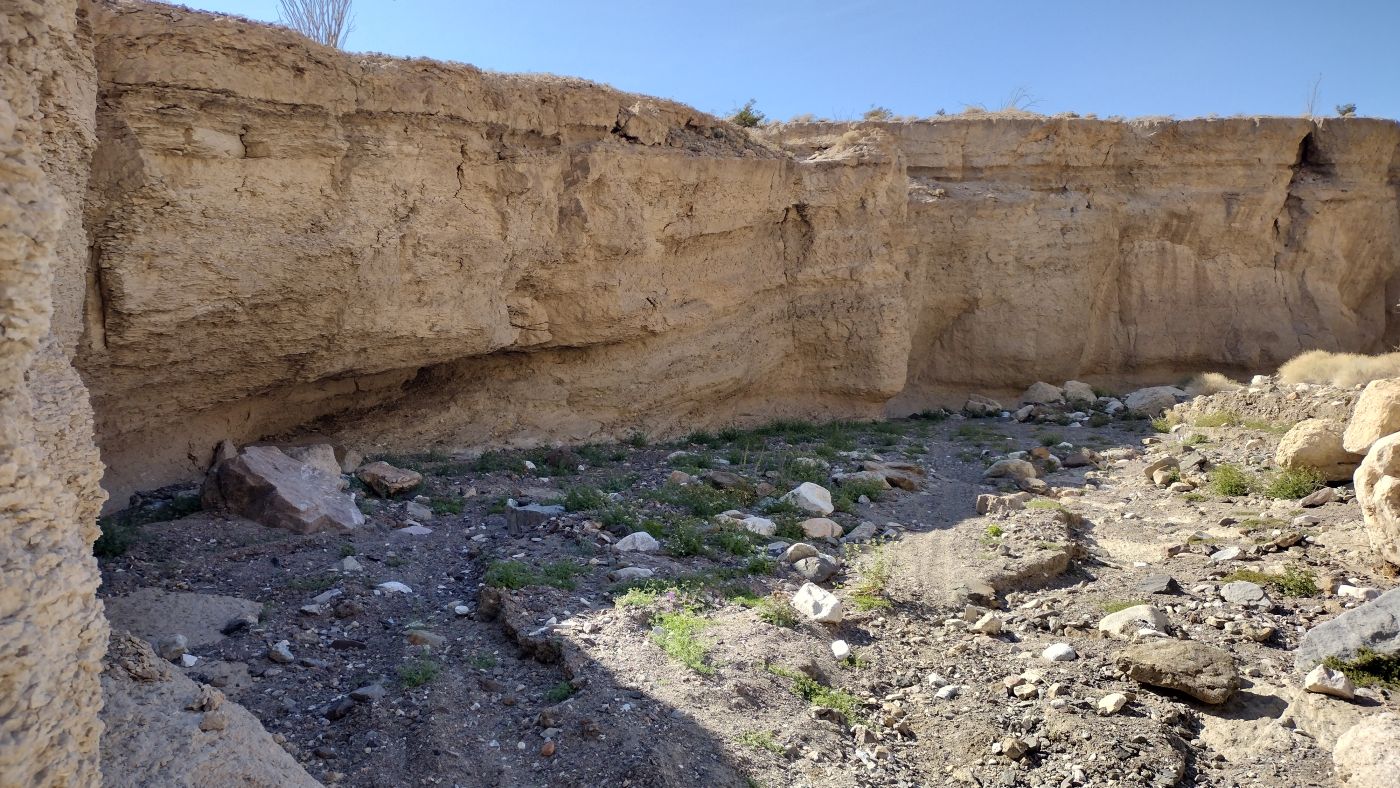
The canyon
bottom is unusual; there are no pure sandy areas. Instead, the bottom
is made of pieces of rock a bit larger than sand, to small gravel.
The one main side canyon we explored had a similar floor, but it was
made of much darker gravel. A recent event had deposited a fan
of this darker gravel in the main canyon, which had not yet been
eroded away.
There had been some pretty good
erosion here in places, probably from the September rain. Don's
pix:
http://tchester.org/temp/230303/rideout/erosion_35.jpg
There was a group of people we met on their way
back to their jeeps parked below the gate. They had a bag of
rocks they had collected, and one guy was carrying out two large
rocks, probably with fossils. (:-(
I had
forgotten that the fossils here were only in small bands of white
rock. Fortunately, Don had noted them, and photographed them:
http://tchester.org/temp/230303/rideout/fossils_35.jpg
This is why the canyon is also known as "Shell
Canyon".
There also were motorcycle tracks in
the main canyon, and we even encountered one.
We
looked very hard for Petalonyx linearis, as well as for Eucnide, up
on the sides of the canyon, but found none.
There
were tons and tons of Hoffmannseggia microphylla (=Caesalpinia
virgata), almost all with their first blooms. Don's pix of a
happy plant:
http://tchester.org/temp/230303/rideout/Hoffmannseggia_microphylla_35.jpg
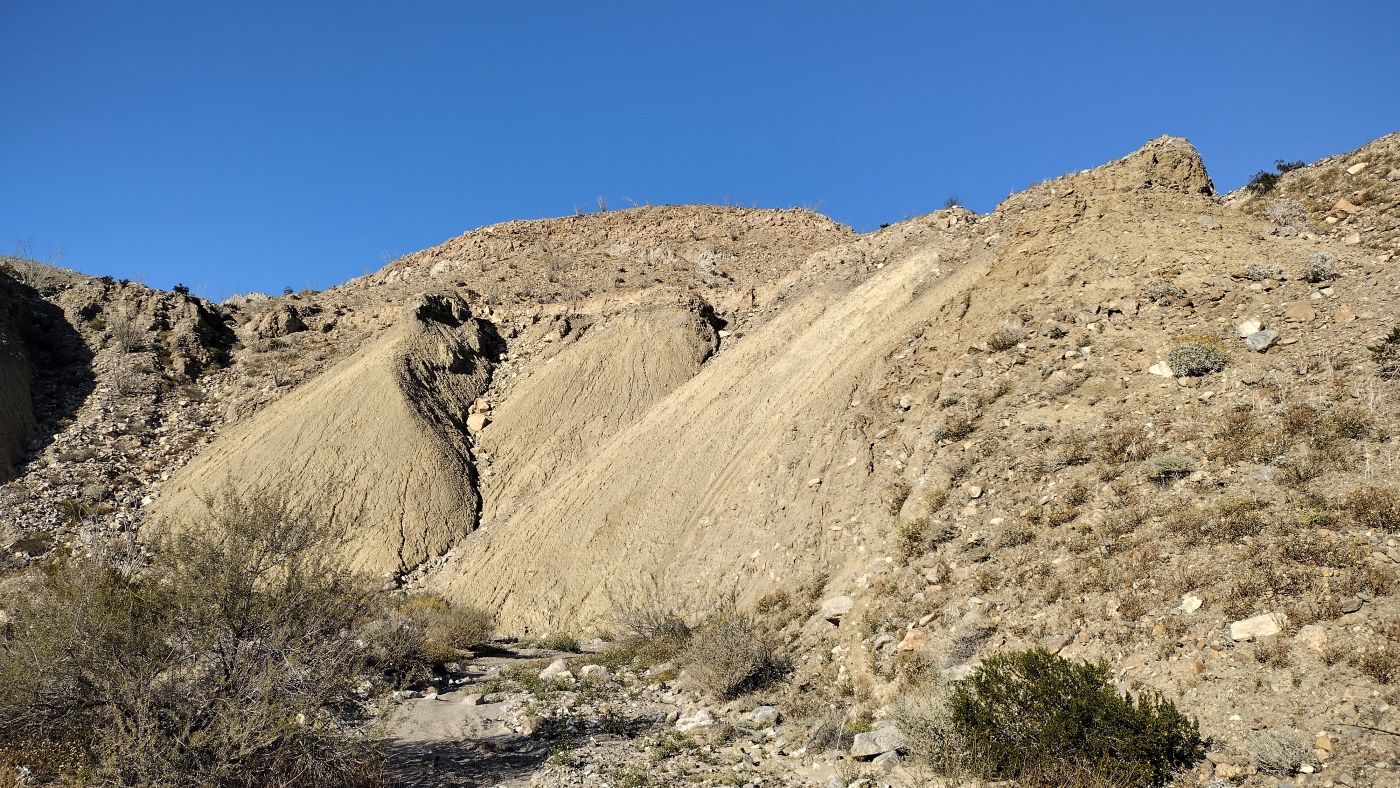
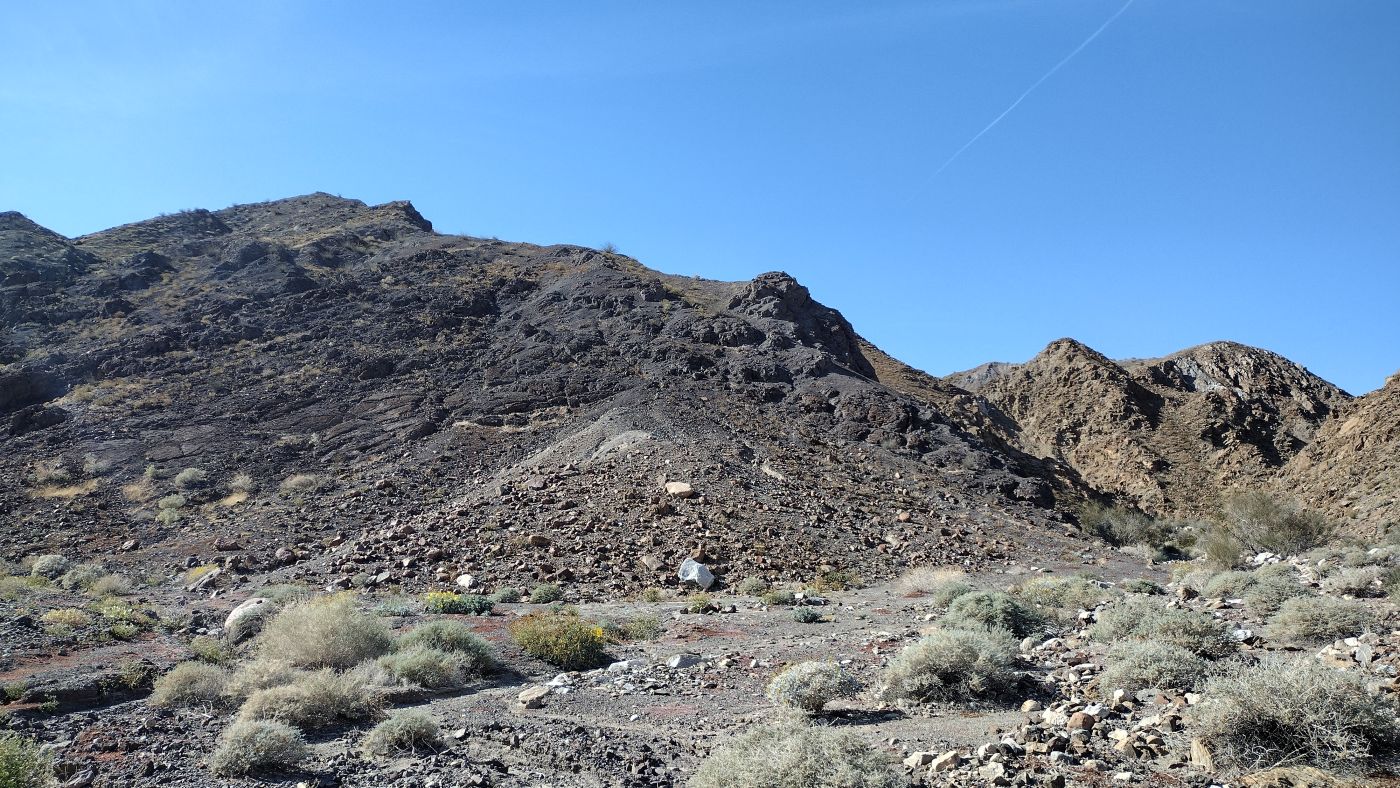
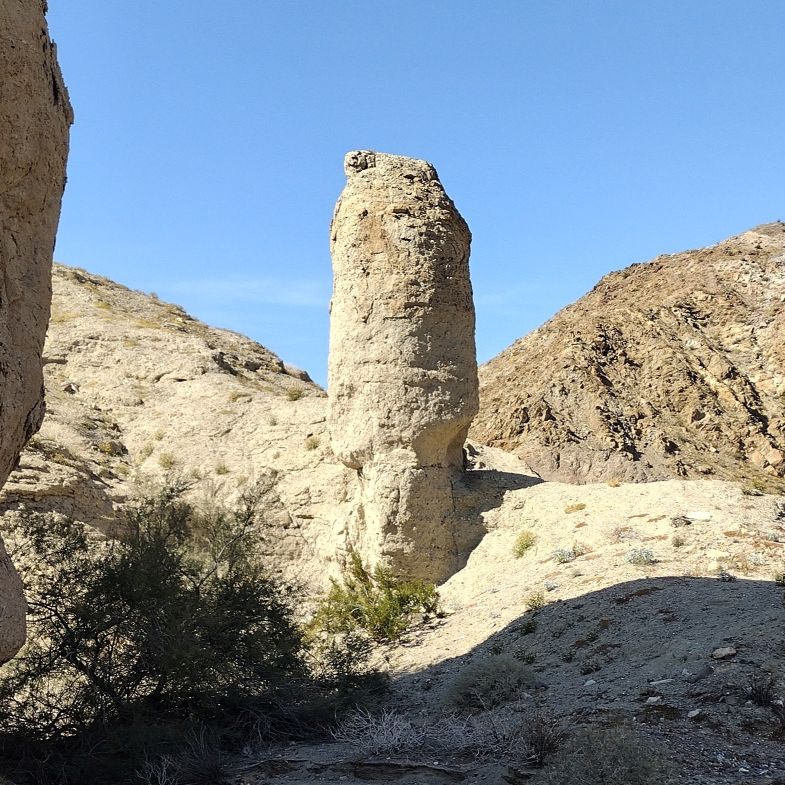
The canyon has absolutely-captivating geology, with
the rock types changing rapidly as we hiked up the canyon. Some
snapshots by Don:
http://tchester.org/temp/230303/rideout/different_rock_layers_1549_35.jpg
http://tchester.org/temp/230303/rideout/heading_up_canyon_1428_35.jpg
http://tchester.org/temp/230303/rideout/heading_up_canyon_1436_35.jpg
http://tchester.org/temp/230303/rideout/pillar_50.jpg
We explored up canyon until it got bouldery and the
going got slower. At that point, we decided we'd cover more
ground by exploring side canyons on the way down. That was a
good decision, since that is where we saw the best Mentzelia
involucrata garden.
I stopped to measure Lupinus
arizonicus flowers twice, getting values of 10 to 11 mm at the first
place near the beginning, and 8 to 11 mm at the second place near our
turn-around point. The latter values fill in part of the gap
between the small-flowered and large-flowered forms found at the end
of Di Giorgio Road. See Fig. 2 here, which does not yet include
these new measurements:
http://tchester.org/bd/species/fabaceae/lupinus_arizonicus_small_flowered_plants.html
There were more insects here than anyplace we've
been recently, but they still weren't terribly abundant. We
also had those birds that fly away as we approach, going to a new
place just a bit farther on, and then fly away again. I always
wonder why they don't just fly sideways to our path to save
themselves some energy. (:-)
It was getting
late in the day by the time we got back to the lower canyon.
Don's pix of one spot:
http://tchester.org/temp/230303/rideout/going_back_out_1753_35.jpg
~7 bats came out at about this time, and Don
managed to get a pix of one with his phone camera!
https://www.inaturalist.org/observations/150281655
We got back to the car at 6:04 p.m., 19 minutes
after sunset, and had a smooth drive home without any traffic delays
except for ~5 minutes at the border checkpoint on I-8.
Plants
in bloom on our hike:
The list I used only had the
original 1993 Jepson names:
#Pls in bloom Jepson
Manual 1 name
99 Achyronychia cooperi
99 Caesalpinia virgata
99
Camissonia cardiophylla ssp. cardiophylla
99
Chamaesyce pediculifera
99 Cryptantha
angustifolia
99 Lotus strigosus
99
Lupinus arizonicus
99 Mentzelia involucrata
99 Perityle emoryi
99
Phacelia pedicellata
99 Plantago ovata
50 Hyptis emoryi
35
Eucnide rupestris
25 Encelia farinosa
25 Geraea canescens
20
Malperia tenuis
15 Allionia incarnata
15 Ditaxis lanceolata
15
Mohavea confertiflora
10 Cryptantha
maritima
10 Eriogonum thomasii
10
Fagonia pachyacantha
10 Gilia latifolia
10 Langloisia setosissima ssp. setosissima
10 Larrea tridentata
10
Physalis crassifolia
5 Bebbia juncea
var. aspera
5 Camissonia californica
5
Chaenactis carphoclinia var. carphoclinia
5
Eschscholzia parishii
3 Trichoptilium
incisum
2 Eriogonum inflatum
2
Oligomeris linifolia
2 Pleurocoronis
pluriseta
2 Senecio mohavensis
1
Cryptantha holoptera
1 Encelia frutescens
1 Gilia stellata
1
Hibiscus denudatus
1 Lycium parishii
1
Nicotiana obtusifolia
1 Orobanche cooperi
1 Phacelia crenulata var. minutiflora
1
Psathyrotes ramosissima
1 Sphaeralcea ambigua
var. rosacea
--
tom
chester